Plastic bulk containers in Wisconsin
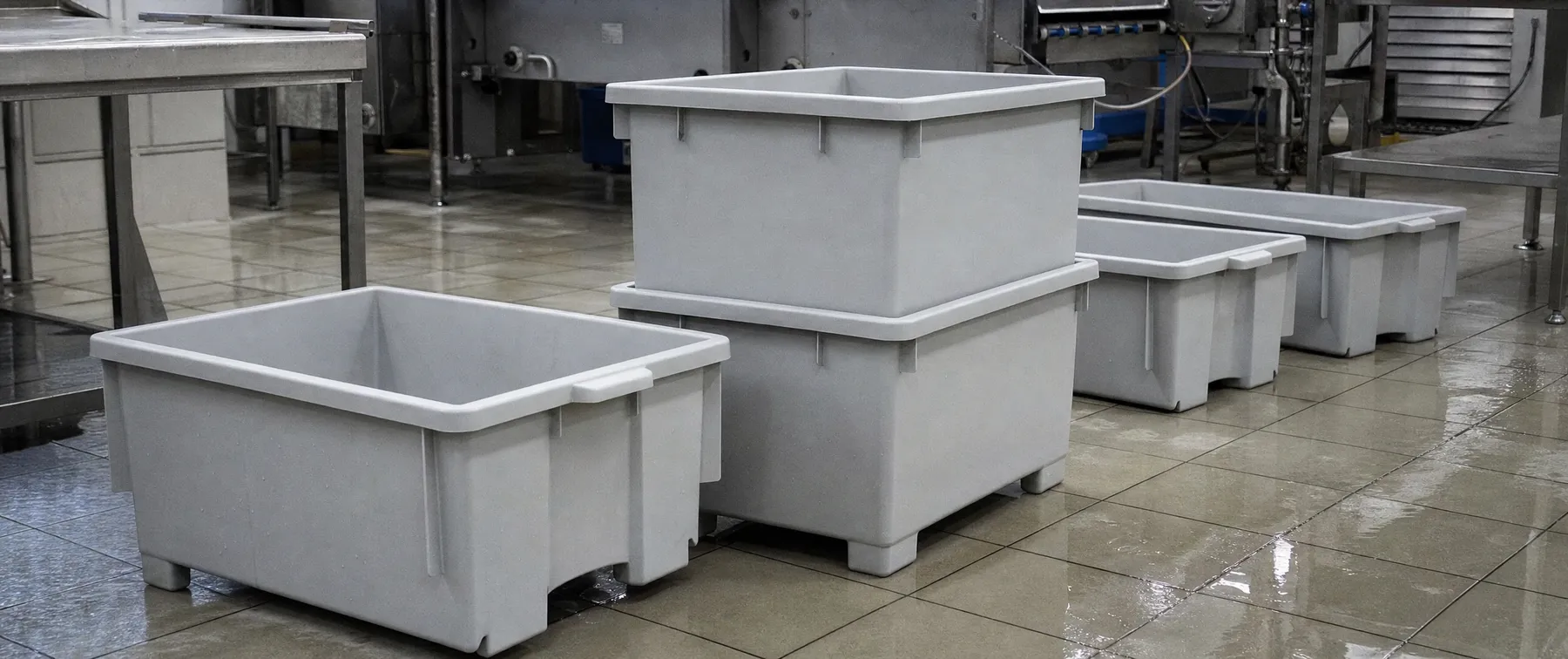
Wisconsin is the dairy state in the numbers as well as the name: 28,840 dairy product jobs in 2025, 8.9 times the national share, level with Nebraska's meat processing as the most concentrated state industry on our area pages. Cheese plants and their suppliers use solid-wall bins that go through a washer between loads, often lidded and colour-coded by zone.
Food manufacturing as a whole had 81,993 jobs, with 16,349 in meat and poultry and 11,014 in fruit and vegetable preserving: cranberries, potatoes, sweet corn, peas and snap beans. USDA counted 297 million cubic feet of refrigerated warehouse space here in October 2025, among the largest of any state.
Wisconsin also has 29,656 plastics product jobs. Kenosha County, between Milwaukee and Chicago, had 8,358 warehousing jobs, twice Milwaukee County's 4,244. For dairy and food plants, the questions we ask first are the resin, how the bins are washed and how cold they get.
Wisconsin makes more cheese than any other state, and cheese plants, many of them small and family-owned, use food-grade bins for curd, blocks and trimmings. Cranberries grow in the bogs of central Wisconsin around Wisconsin Rapids; they are harvested by flooding the bog in autumn, then trucked in bins or bulk to receivers. Potatoes and vegetables for canning and freezing come off the central sands around Stevens Point and Plover. Winters are long and cold, so for unheated storage we would steer toward polyethylene.
Cheese plants need white or blue food-grade bins with lids and a resin statement, and for bins small enough to move by pallet jack in tight rooms. Cranberry receivers use bins that drain. Potato and vegetable growers on the central sands want vented bins for storage. Paper and printing plants in the Fox Valley sometimes need heavy fixed-wall bins for trim and cores.
What buyers in Wisconsin use
- Dairy product manufacturing: Washable solid-wall bins
- Curd, blocks and ingredients move in bins that survive caustic washes.
- Fruit and vegetable preserving: Macro bins, solid or vented
- Growers fill them in the field and the cannery tips them straight into a flume.
- Plastics product manufacturing: Tall collapsibles with liners
- Pellets and regrind are bulky before they are heavy; a liner keeps changeovers clean.
- Food manufacturing: Washable solid-wall bins
- Bins replace corrugated where sanitation crews hose everything down.
- Meat and poultry processing: Solid-wall combo bins
- Trim goes to coolers in smooth bins that take hot water every shift.
Figures on this page: BLS QCEW 2025, private employment; USDA NASS, Capacity of Refrigerated Warehouses.
Counties with the most warehouses
Kenosha County, Milwaukee County, Waukesha County.
Send the footprint, heaviest load, how many and the ZIP, and we quote containers delivered anywhere in Wisconsin. Ask for a quote