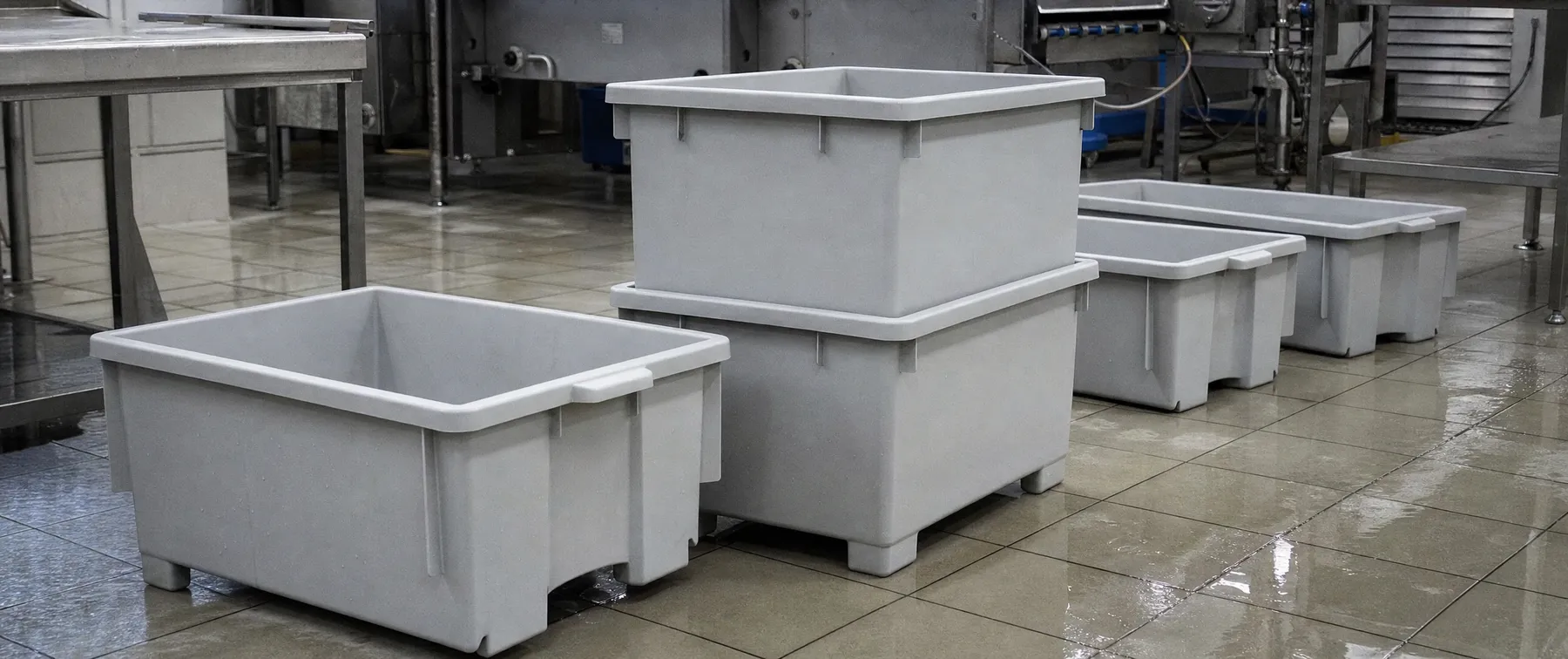
Plastic combo bins for meat and poultry
A combo bin is the bulk container of a meat or poultry plant: a pallet-size bin that carries trim, parts or whole birds between rooms and out to further processing. Plants that move to plastic do it for washdown. A solid-wall bin is cleaned and back in service the same shift; a corrugated combo is used once and baled.
Containers that suit it
Fixed-wall bulk bin, solid
No hinges or latches to trap product. For bins that stay inside one plant, this is the simplest one to keep clean.
Plastic bulk bins
The range of pallet bins, from fixed wall to folding, when product moves between a slaughter plant and a further-processing plant.
Lids
Covered product in coolers and on trucks.
What to ask for
- Solid walls and a smooth inside
- No vents, no ribs inside the wall. Ask for drain holes only if the bin is washed in place.
- Load in the wet
- Meat is dense. A full 48 x 40 in bin of trim can reach the top of the 1,500 to 2,000 lb class. Send your heaviest fill.
- A food-contact resin statement
- For the exact model, in the quote.
- Cold
- If bins sit in a freezer, say so: some resins get brittle at low temperatures, and we check the rating for the model we name.
Where the industry is
Among the states on our area pages, meat and poultry processing employs the most people in Georgia (42,030 jobs), North Carolina (35,715), Arkansas (34,773) and Iowa (33,386), followed by Nebraska, Alabama, Kansas and Mississippi. The counts are private-sector jobs in 2025 from the Bureau of Labor Statistics' Quarterly Census of Employment and Wages (BLS QCEW 2025, NAICS 3116).
The concentration is sharpest in a few places. In Hall County, Georgia, meat and poultry processing is 28.9 times its national share of jobs; in Nebraska, 8.9 times; in Arkansas, 7.5 times.
Why plastic combo bins
A corrugated combo bin is used once, can leak when it holds wet product, and goes into the baler. A plastic one is washed and used again, holds liquid, and doesn't shed fibre into product. Plants that ship between their own sites see the return trip as the catch: combo bins are bulky empty, so a nesting or folding model saves trucks if the empties travel far.
Inside one plant, fixed-wall bins are simplest to clean. Across plants, ask whether a nesting or folding model suits your washing.
Colour coding is common: one colour for edible product, another for inedible trim or waste, so the two never mix on the floor. Decide the colours before ordering.
Combo bins often carry a plastic liner bag for frozen trim.
Lids keep drip off.