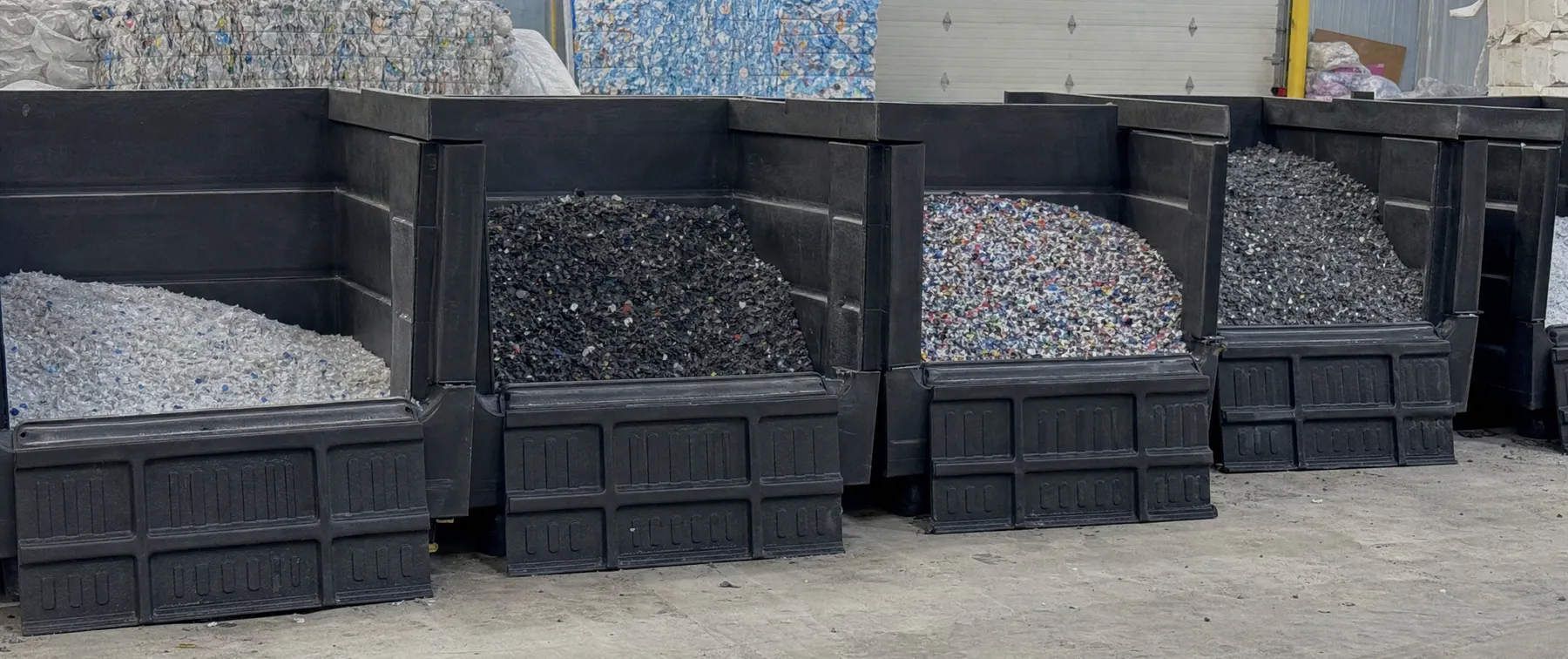
Bulk bins for recycling and scrap
In a recycling yard or a scrap processor's plant, bins rarely leave the building. They sit at sort stations, fill with one grade of material, and go by forklift to the baler, the shredder or the outbound trailer. That makes it fixed-wall country: no hinges to bend, nothing to latch, and a drop door where the sorters need one.
Containers that suit it
Fixed-wall bulk container
Rigid, one-piece, four-way forklift entry. The 48 x 44 x 29 in example is rated 700 lb, which suits plastics, fibre and light scrap; heavier models are made for denser grades.
Drop doors
A door low in the wall lets a sorter pull the last material out by hand.
Half-size bins
For dense metals that would push a full-size bin past its rating.
What to ask for
- Load rating against your densest grade
- A bin full of plastic film and a bin full of brass turnings are different problems. Send the densest grade it will hold.
- Colour by grade
- One colour per grade keeps bins at the right station and material out of the wrong bale.
- Tipping
- If bins are emptied with a rotating fork or a dumper, tell us so we check the rim and base.
- Outdoor use
- Bins that sit outside need UV-stabilised resin.
Why plastic in a scrap yard
Steel bins last but weigh a lot, rust, and are hard on floors. Corrugated gaylords are cheap but soften in the wet and go into the baler with the material. A plastic bin is light enough that the tare counts for little against the load, doesn't rust, and outlives many gaylords. Where the material has sharp edges, a heavier wall section is worth asking for.
We quote recycling bins to any US state. Recycling isn't counted the same way factory jobs are in the federal statistics we use on our area pages, so we don't list states for it here.
Sort stations
At a sort line, bins sit under chutes or beside a picker and fill with one grade. A drop door on the side facing the aisle lets the last of a grade be pulled out by hand; a bin emptied by a rotating fork needs a strong rim and base instead. Bins next to a chute need a rim that takes knocks.
Weighing
Recyclers often weigh each bin on a floor scale before baling or shipping. A known, consistent tare makes that simple: write the bin's empty weight on it.
Bins at a scrap yard take abuse that bins on an assembly line never see: sharp metal, forks driven in hard, loads dropped from a magnet or grapple. Thick walls and a strong base matter more than looks. Plants that bale or shred on site use smaller containers at each machine to gather off-cuts before they go to the baler.
Grade signs on each bin help sorters work fast.