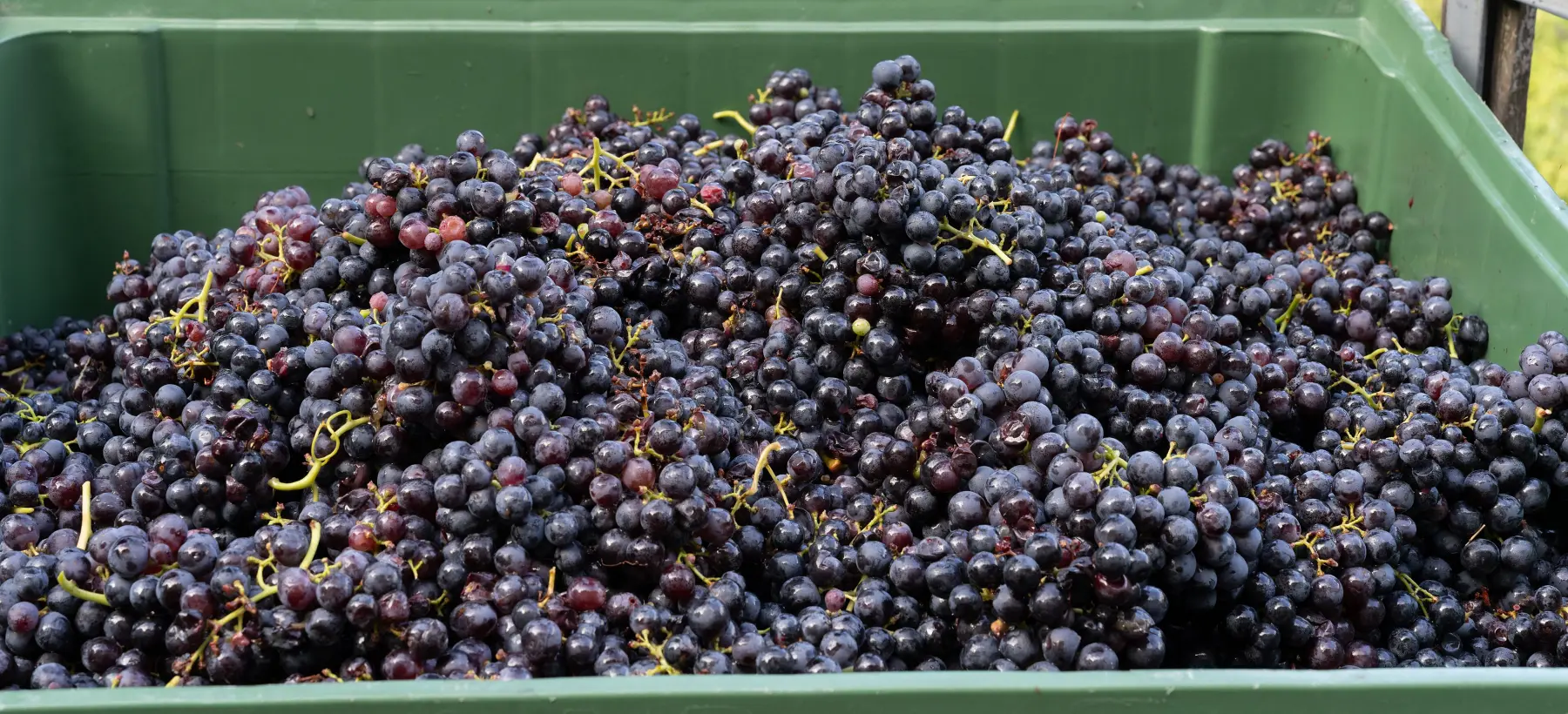
Harvest bins for grapes
Grapes are picked into bins that have to hold juice. The fruit at the bottom splits under the weight above it, and a vented bin leaks that juice onto the trailer bed and the road. So the grape bin is a solid-wall bin, and many wineries use the same bin for small-lot fermentation once it reaches the crush pad.
Containers that suit it
Macro bin, solid wall
48 x 40 x 31 in, 1,500 lb, 190 gallons. Solid walls hold juice; the seller says the MACX bin meets USDA/HACCP standards for food handling.
Folding field bin
Lighter on wet ground and folds to 10 in, with an FDA-approved colour offered. Check the doors seal well enough for juice before choosing it.

What to ask for
- Solid walls and no drain holes
- Unless the bin is meant to drain.
- A food-contact resin statement
- If the bin is used for fermentation, the must sits in it for days. We confirm the resin for the model.
- Fork entry from the row
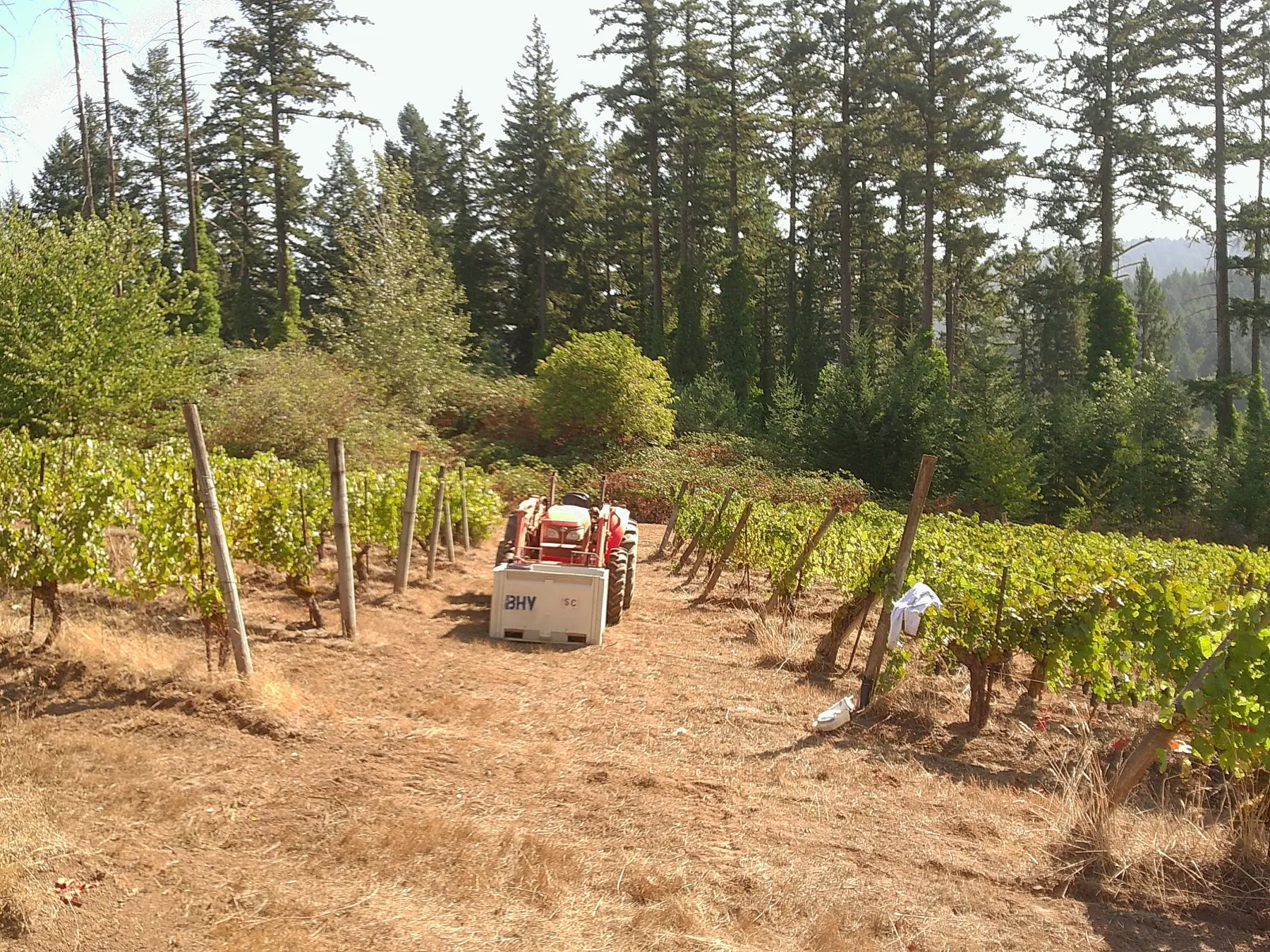
- Bins come out of the vineyard on loaders and small forklifts like the one in the photograph. Four-way entry helps.
Bin height and the fruit
Grape clusters crush under their own weight. A 31 in deep macro bin holds a lot of fruit, and some growers prefer to fill it only part-way for whole-cluster or delicate varieties. Tell us how full you fill and we will quote a bin that suits rather than one that is merely the biggest.
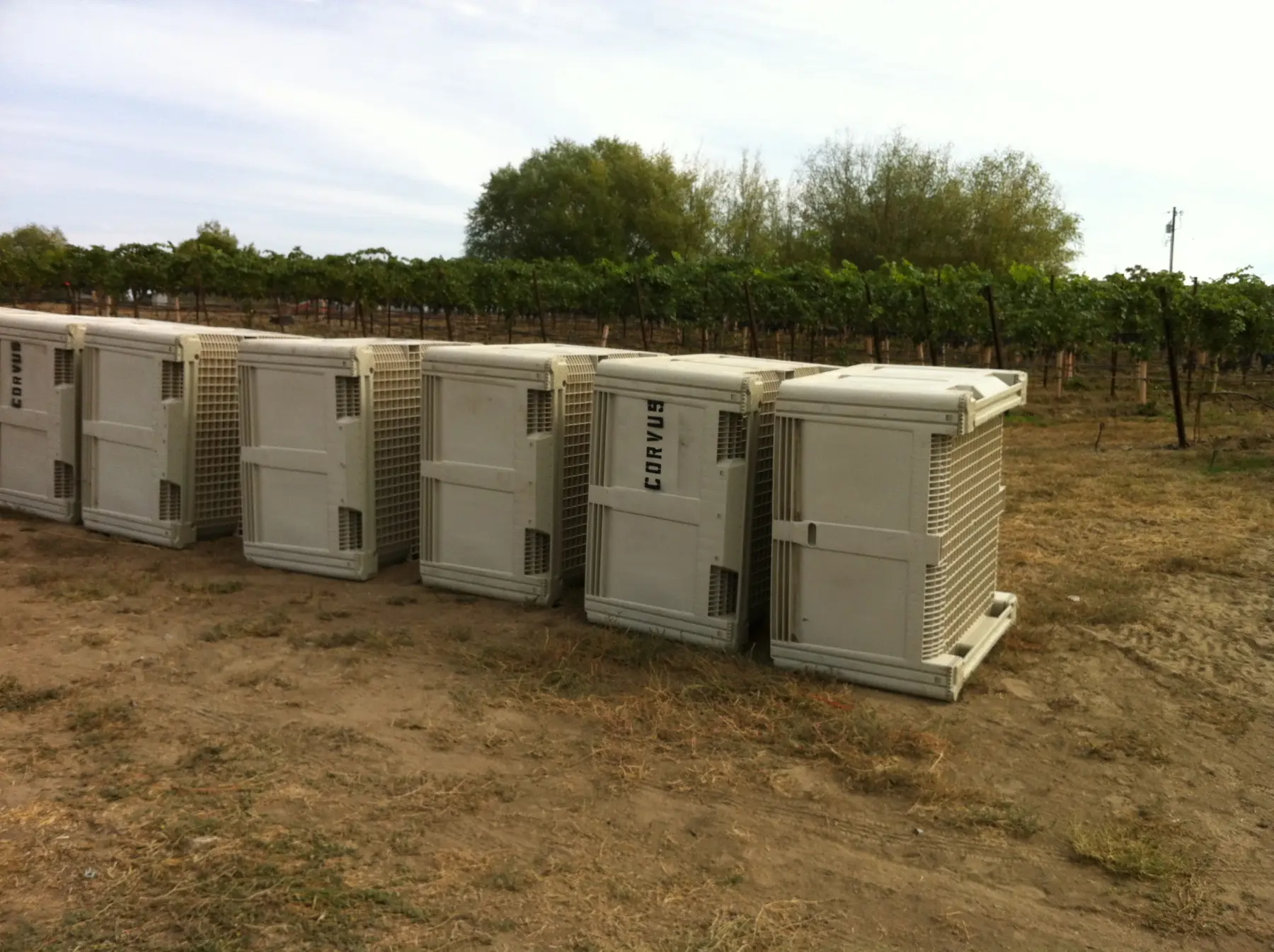
The photograph at the top shows dark grapes in a collection bin; the one beside the macro bin shows empty harvest bins set out at the end of a row.
From the row to the crush pad
Pickers fill lugs or buckets and tip them into bins at the end of the row, or straight onto a bin on a trailer. Full bins go to the winery on flatbeds, are weighed, and are tipped into a hopper or a destemmer. Bins for that work need fork pockets that take a bin tipper, and walls smooth enough to tip clean.
Washing between loads
Grape juice and skins dry hard. Solid bins with smooth walls hose out quickly; washing them between picks keeps fruit flies and spoilage organisms from building up during harvest.
Picking by hand or machine
Hand crews cut clusters into small lugs or picking tubs and tip those into a bin on a trailer in the row. Machine harvesters shake the vine and convey berries straight into a gondola or bins riding beside them. Machine-picked fruit is broken and juicy, so bins used for it must be solid, with no vents or drain holes, or the juice ends up on the road.
Cleaning after crush
Sugar and must left in a bin ferment and draw fruit flies within hours. Wineries rinse bins at the crush pad before they go back to the vineyard; smooth plastic cleans faster than wood, which is one reason plastic replaced wooden bins at many wineries.
Wine grapes are weighed and sampled for sugar on arrival; growers are paid on that weight, so bins need consistent tare weights stamped or recorded.
Bins by the ton
Growers often plan bins by the expected tonnage per block, with spares for a heavy year. Each bin's tare weight is subtracted at the scale, so keep the tare consistent and marked.
Table grapes, unlike wine grapes, are packed in the field into small boxes; bins there carry only culls.
Wineries in cool regions harvest at night or before dawn to keep fruit cool, so bins must be easy to spot and handle under lights.
Send the tonnage, how full you fill a bin and the ZIP of the vineyard or winery. Ask for a quote