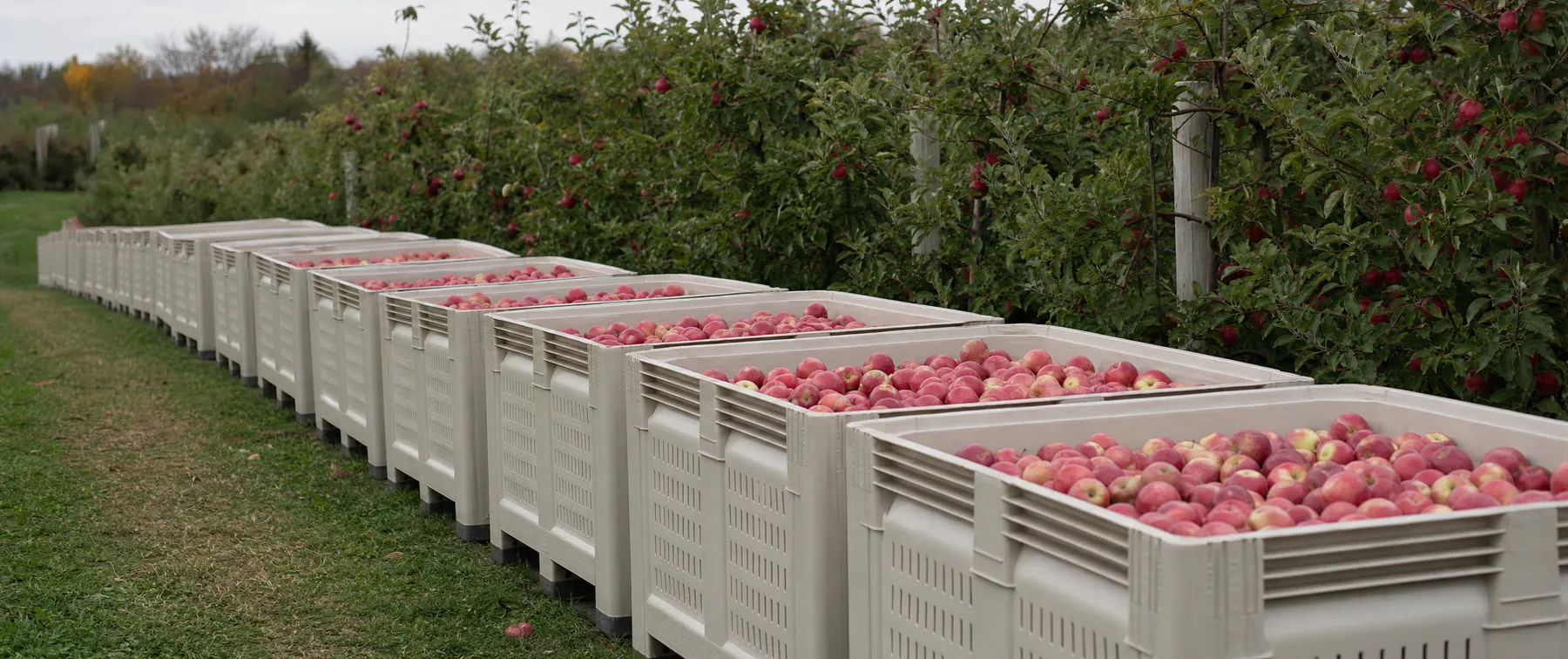
Plastic apple bins
An apple bin goes from the orchard row to the packing house and into cold or controlled-atmosphere storage, sometimes for months. Growers moving from wood bins to plastic do it because plastic washes clean, doesn't splinter into the fruit, and lasts many seasons stacked high in a cold room.
Containers that suit it
Macro bin
48 x 40 x 31 in, 1,500 lb, 14,000 lb stack load, nests empty at 150 to a truck. Solid walls protect fruit that bruises.
48 x 48 in bins
Many packing houses take a 48 x 48 in footprint. Ask your packer which footprint their dumper and cold rooms are built for.
What to ask for
- Stack load
- Bins in cold storage stack high. Ask for the stack load of the model; 14,000 lb on the MACX example.
- Solid or vented
- Solid walls protect against bruising; vents help the cold reach the fruit. Packers have a view on this.
- Grower marks
- Colour or hot-stamping so bins come back from the packer to the right orchard.
Where apple bins go
Washington is the largest apple state, and the Yakima area is one of its centres: fruit and vegetable preserving there is 8.9 times its national share of jobs, and Washington had 301 million cubic feet of refrigerated warehouse space on 1 October 2025, by USDA's count. Michigan, New York and Pennsylvania grow apples too.
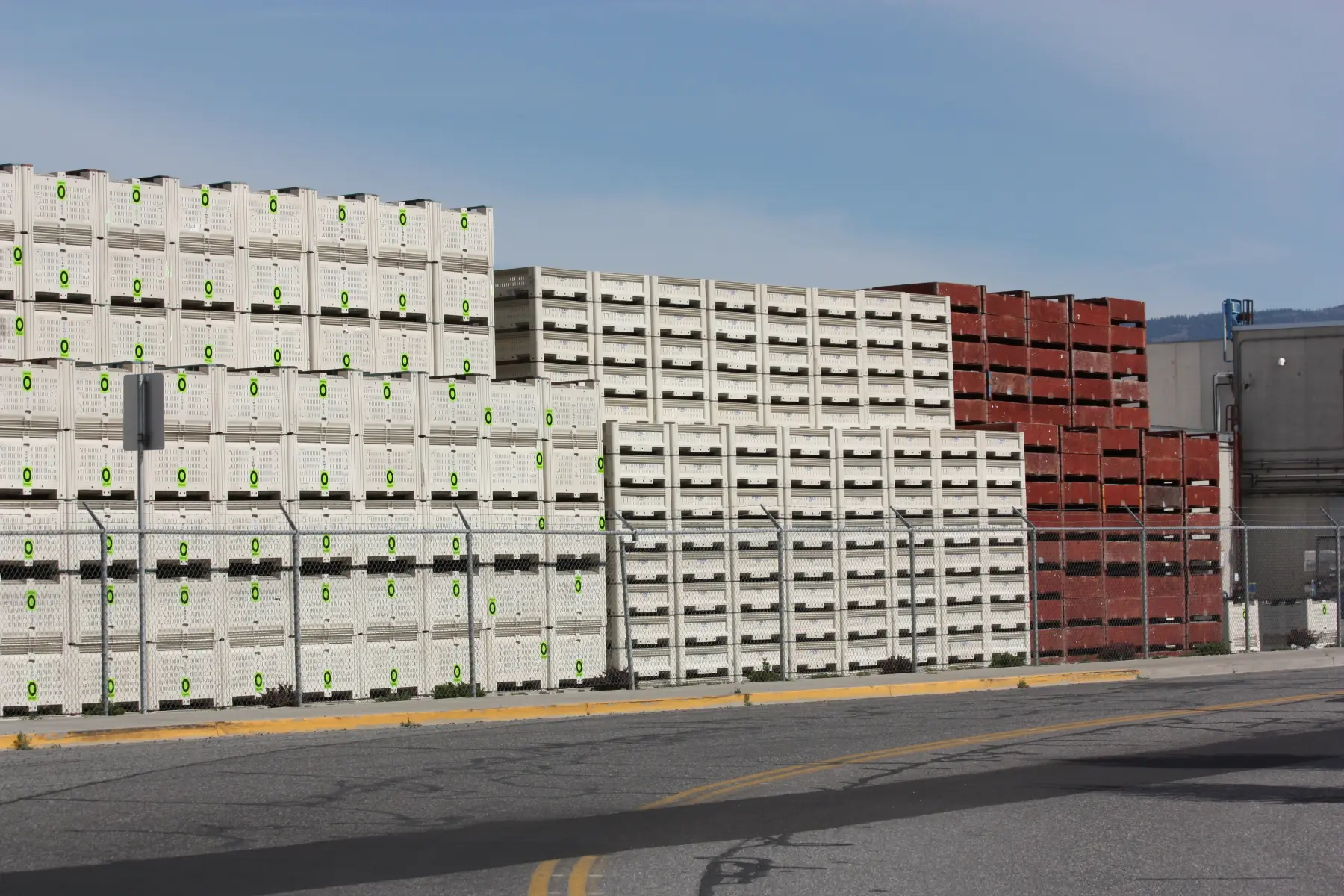
The photograph at the top shows apples in vented plastic bulk bins; the stacked bins beside the macro bin are fruit bins in a packing-house yard between seasons.
From the row to storage
Pickers empty their bags into bins set out along the row. Bins are lifted onto a trailer by a forklift or a bin carrier, taken to the packing house, weighed and marked, and go into cold or controlled-atmosphere storage until the fruit is packed. A bin may stay stacked for months, so the stack load and the fit of the bins to each other count as much as the capacity.
Bruising
Apples bruise against hard edges and against each other. Smooth inside walls, no sharp vent edges and a floor that doesn't flex under the load all help. Ask your packer what they accept.
From the orchard to controlled atmosphere
Apples kept for sale in spring spend months in sealed rooms where oxygen is lowered and carbon dioxide held steady, slowing ripening. Bins go into those rooms stacked high, often seven or eight tall, and stay there untouched until the room opens. A bin that sags or splits partway down a stack in February means a lost room's worth of handling, so packers inspect bins before harvest and retire cracked ones.
Bruising
Apples bruise against hard edges and against each other when dropped. Pickers lower their bags into the bin rather than dumping from a height, and smooth inside walls with rounded corners help. Some growers add a pad on the floor of the bin for soft varieties such as Honeycrisp.
Bins are often dunked whole into water flumes at the packing line, so the fruit floats out gently.
Before harvest
Count bins in early summer, not in September. Repair or replace cracked ones, wash them, and place orders for new bins early enough that delivery arrives before the first pick. Late bins mean fruit left on the tree.
Organic growers sometimes keep a separate, marked fleet of bins so organic and conventional fruit never share one.
Fruit for juice and sauce, the lower grades, goes to processors in the same bins; mark them so they come back to the orchard.
Send the footprint your packer takes, solid or vented, and how many truckloads. Ask for a quote