Collapsible bulk containers
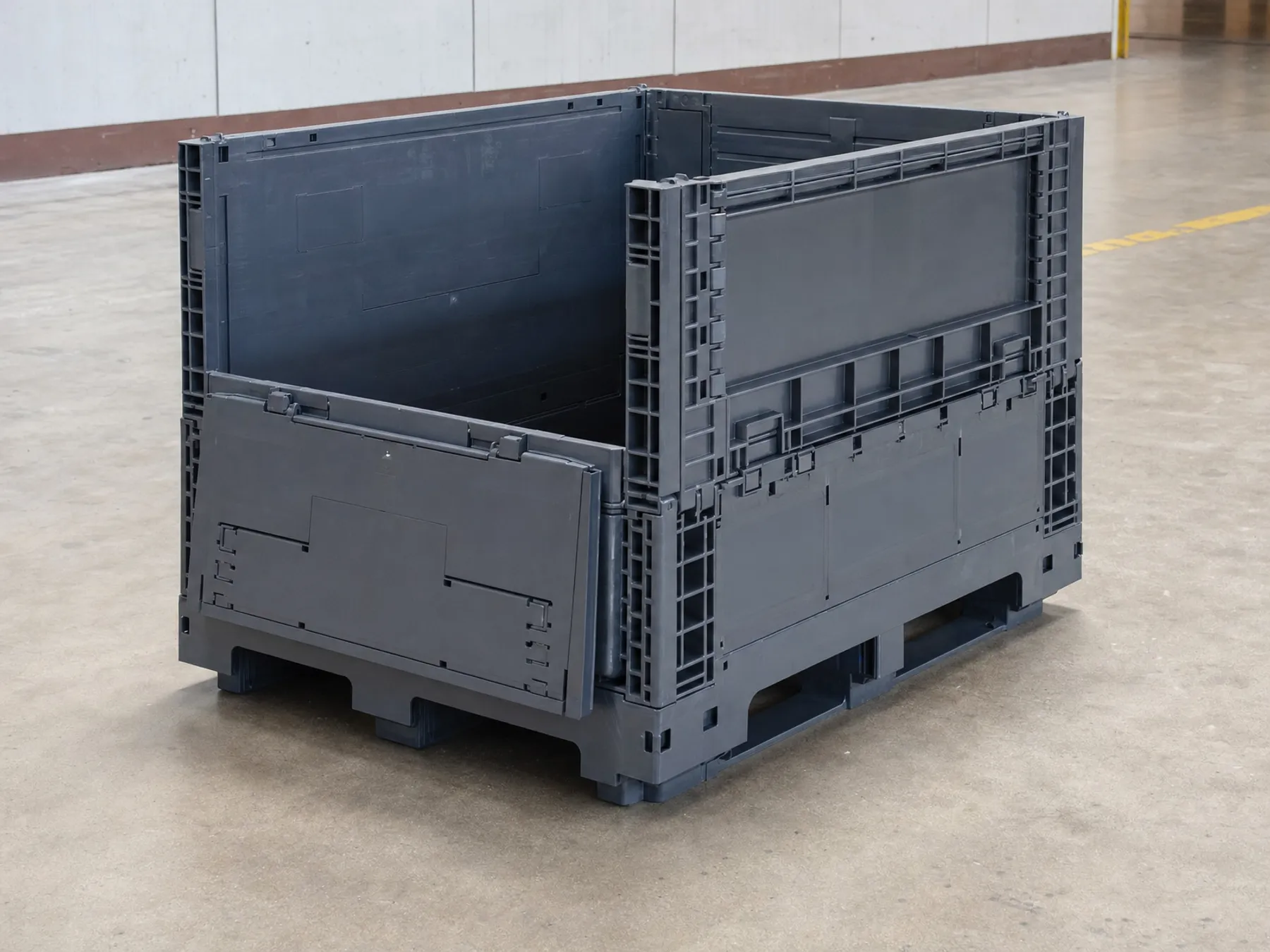
A collapsible bulk container is a plastic pallet container whose walls fold down onto its base, so the empties ride back to the supplier at a fraction of the space. It is the container for a closed loop: you fill it, ship it, empty it, fold it and send it home.
Specifications
| Line | Imperial | Metric |
|---|---|---|
| Outside size | 48 x 40 x 32 in | 1,219 mm x 1,016 mm x 813 mm |
| Inside length x width | 45 x 37 in | 1,143 mm x 940 mm |
| Load capacity | 1,500 lb | 680 kg |
| Collapsed height | 13.5 in | 343 mm |
| Return ratio | 2.32:1 | 2.32:1 |
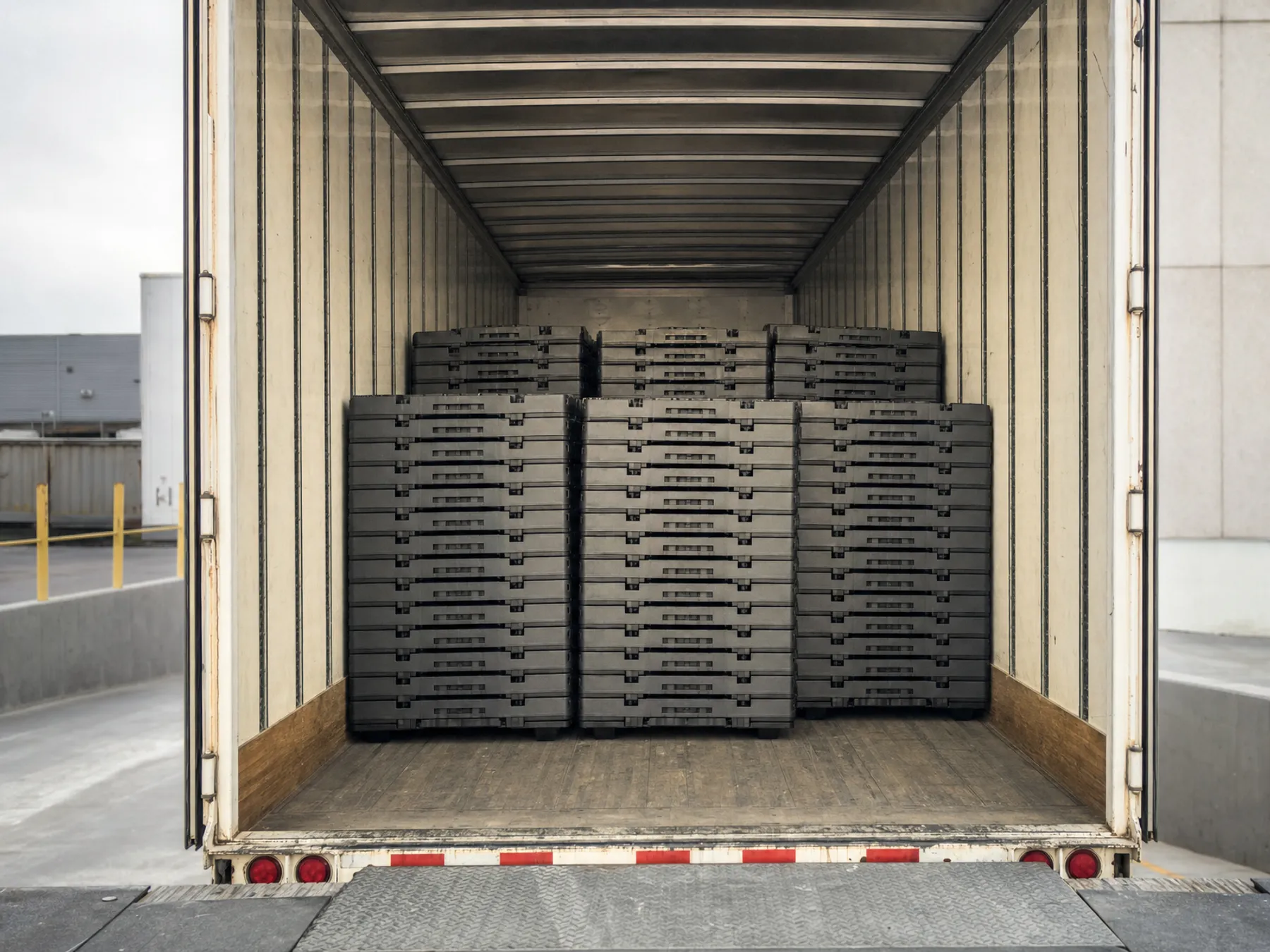
| 53 ft trailer count | 240 collapsed, 90 assembled | 16.15 m trailer |
| Resin and build | HDPE, structural-foam vented sidewalls, one-piece molded base | – |
Metric figures are converted from the maker's imperial figures (1 in = 25.4 mm, 1 lb = 0.4536 kg, 1 US gal = 3.785 L) and rounded. Sources last reviewed 14 November 2026.
Footprints it comes in
- 48 x 40 in, the size in the table
- 48 x 45 in, the most models
- 32 x 30 in
- 56 x 48 in
- 64 x 48 in
- 70 x 48 in
- 78 x 48 in
- 1200 x 1000 mm, export lanes
Options
- Lids
- A lid keeps dust and rain off and lets a full container take a load on top. Lids take trailer space on the way back; say whether they travel with the empties.
- Runners or four-way base
- Runners suit roller conveyor and some rack beams; a four-way base suits forks and pallet jacks from any side. Tell us what handles it.
- Drop doors
- A door in one or two sidewalls lets a picker reach the last parts without leaning in.
- Card holders
- A moulded or clip-on holder for the routing card, so each container in the loop can be read at the dock.
When folding pays
Collapsing earns its keep on the return trip. In the table above, 90 assembled containers fill a 53 ft trailer, and 240 folded ones fit the same trailer going home. If your empties travel back to a supplier every week, that is the number to put against what you pay for freight today.
If the empties never leave your building, the latches and hinges are parts you are paying for and not using. A fixed-wall container is usually the simpler buy there. We will say so when we quote.
Reading the table
Footprint first: it has to match your racking, your line positions and how the containers sit across the trailer. Then height, which sets volume and, with the footprint, the trailer count. Load capacity is what one container is rated to hold; stacking ratings are a different number and we write them separately for the model we quote. Collapsed height is the figure that decides the return trip, and the return ratio is that figure turned into a ratio.
What to send us
The footprint, the heaviest fill, how many, the ZIP they deliver to, and whether they go round a loop. If parts need dunnage or dividers, say what the parts are. We match the model and send the spec lines with the price.
Questions about collapsible bulk containers
- Do the walls lock?
- Yes, latches hold each wall upright.
- Can they be repaired?
- Latches and doors are replaceable.
- Which colours are common?
- Black and charcoal for industrial loops, grey and blue elsewhere.
- How long does folding take?
- Quick once a crew has done it a few times: unlatch, fold the short walls in, then the long walls down on top.