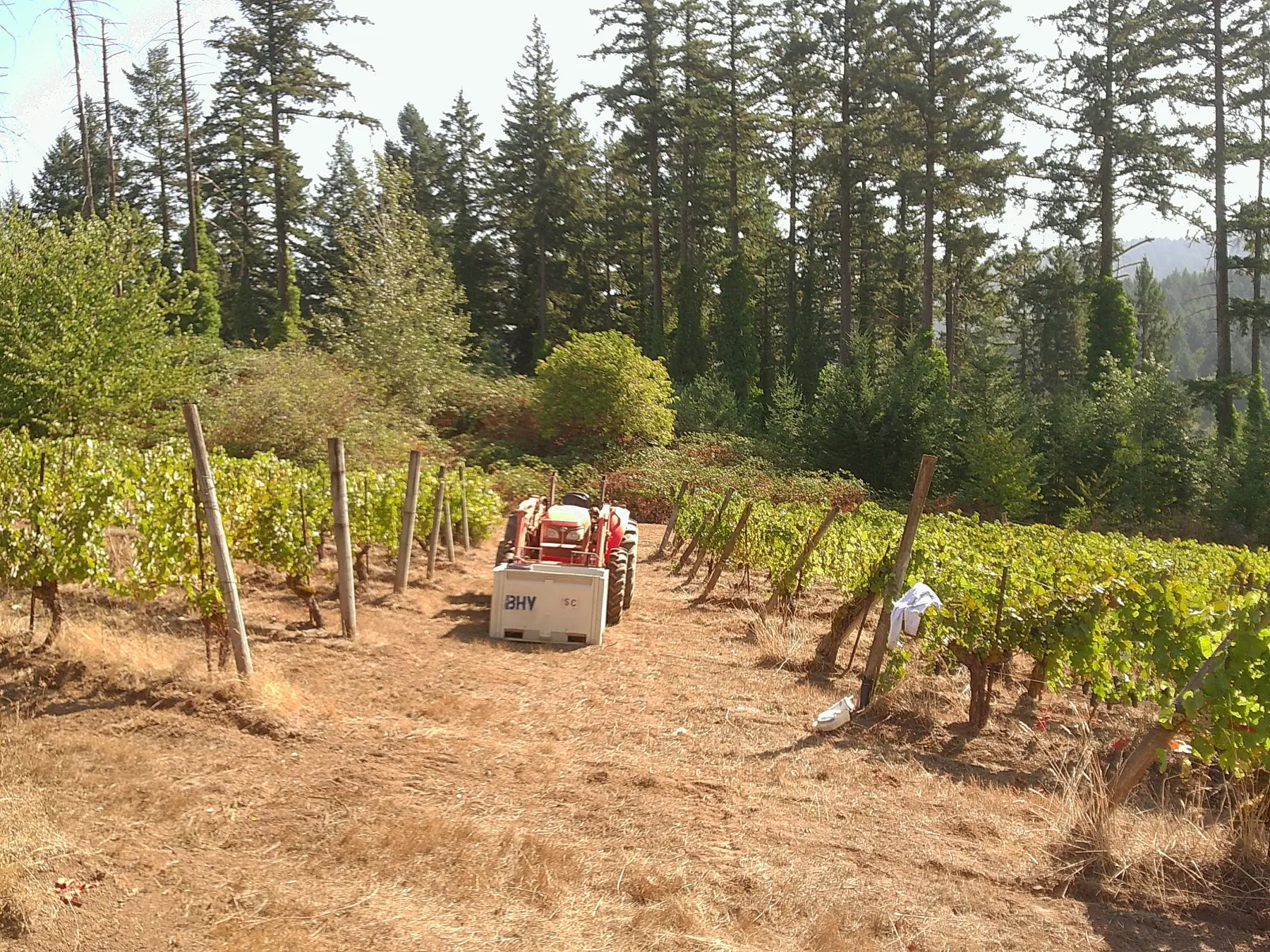
Harvest bins for growers and packers
Orchards, vineyards, row-crop growers and packing sheds use plastic harvest bins to move a crop from the field to the shed and into storage. The bin goes out empty, comes back full on a loader or a forklift, and spends the season going round between the grower and the packer. Growers usually buy them by the truckload.
Containers that suit it
Macro bin
The one-piece harvest bin: 48 x 40 x 31 in, 1,500 lb, nests empty at 150 to a truckload. Solid or vented.
Folding field bin
Lighter at 78 lb, drop doors on all four sides, 330 folded per trailer. For crops picked from any side and bins shared across ranches.
48 x 48 in vented bins
Some crops and packers run 48 x 48 in bins, such as the MacroBin 48 Full Vent at 48 x 48 x 53 in outside.

What to ask for
- Solid or vented
- Solid for fruit that bruises and grapes that weep juice; vented for onions, nuts and potatoes that need air in storage.
- The packer's footprint
- Bins have to fit the packer's dumper and cold-room racking. Ask the packer before you order.
- Marking
- Colour or hot-stamped grower marks so bins come back to the right ranch.
- Outdoor storage
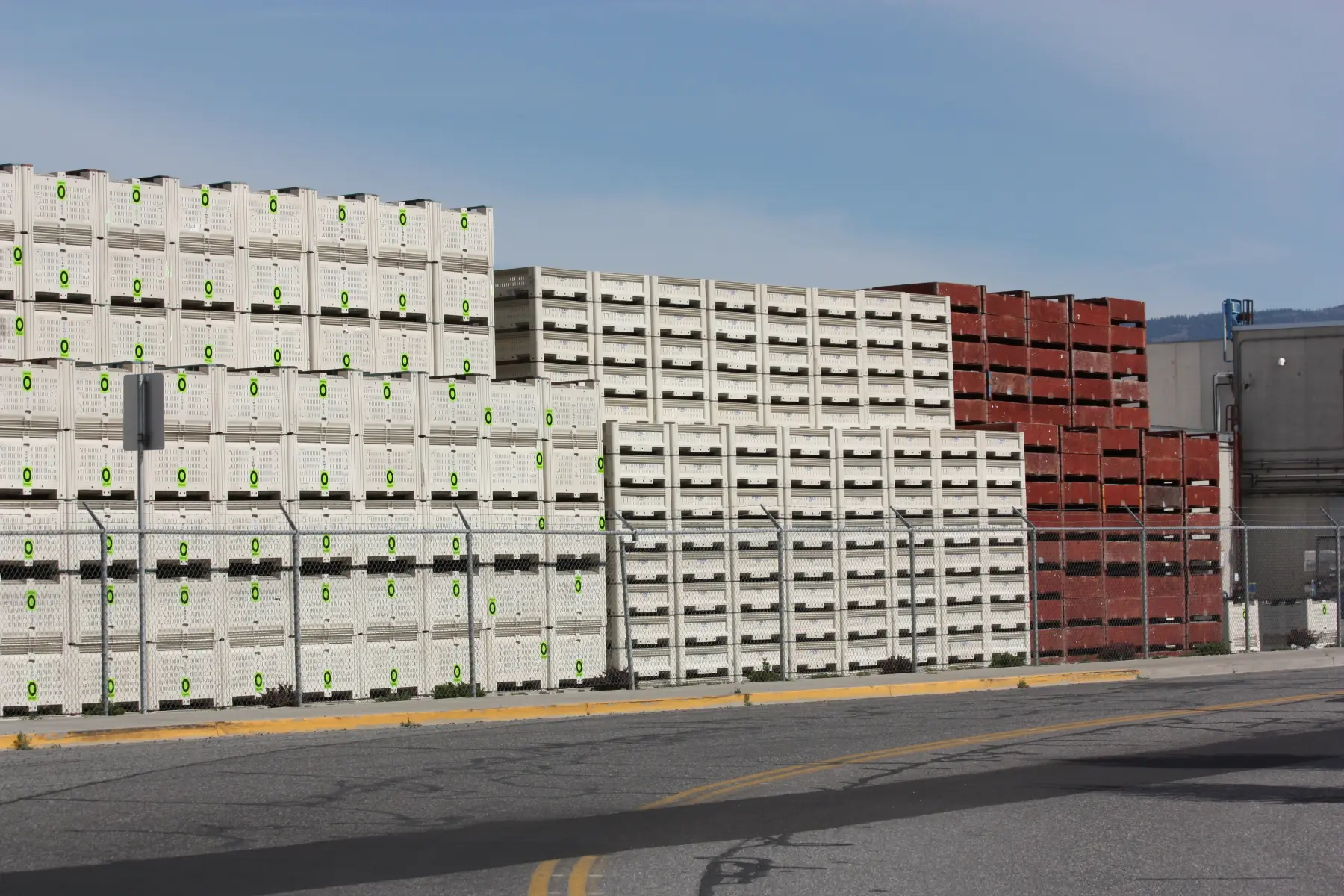
- Bins that sit in the yard between seasons need UV-stabilised resin. We confirm it for the model.
Where the industry is
Among the states on our area pages, fruit and vegetable preserving employs the most people in California (27,518 jobs), Wisconsin (11,014), Washington (10,988) and Ohio (10,327), followed by Oregon, Idaho and Michigan. The counts are private-sector jobs in 2025 from the Bureau of Labor Statistics' Quarterly Census of Employment and Wages (BLS QCEW 2025, NAICS 3114).
Growing regions don't show in factory job counts, so we also list them by place: Yakima for apples, Fresno and the San Joaquin Valley for tree fruit, grapes and nuts, Salinas for vegetables.
By crop
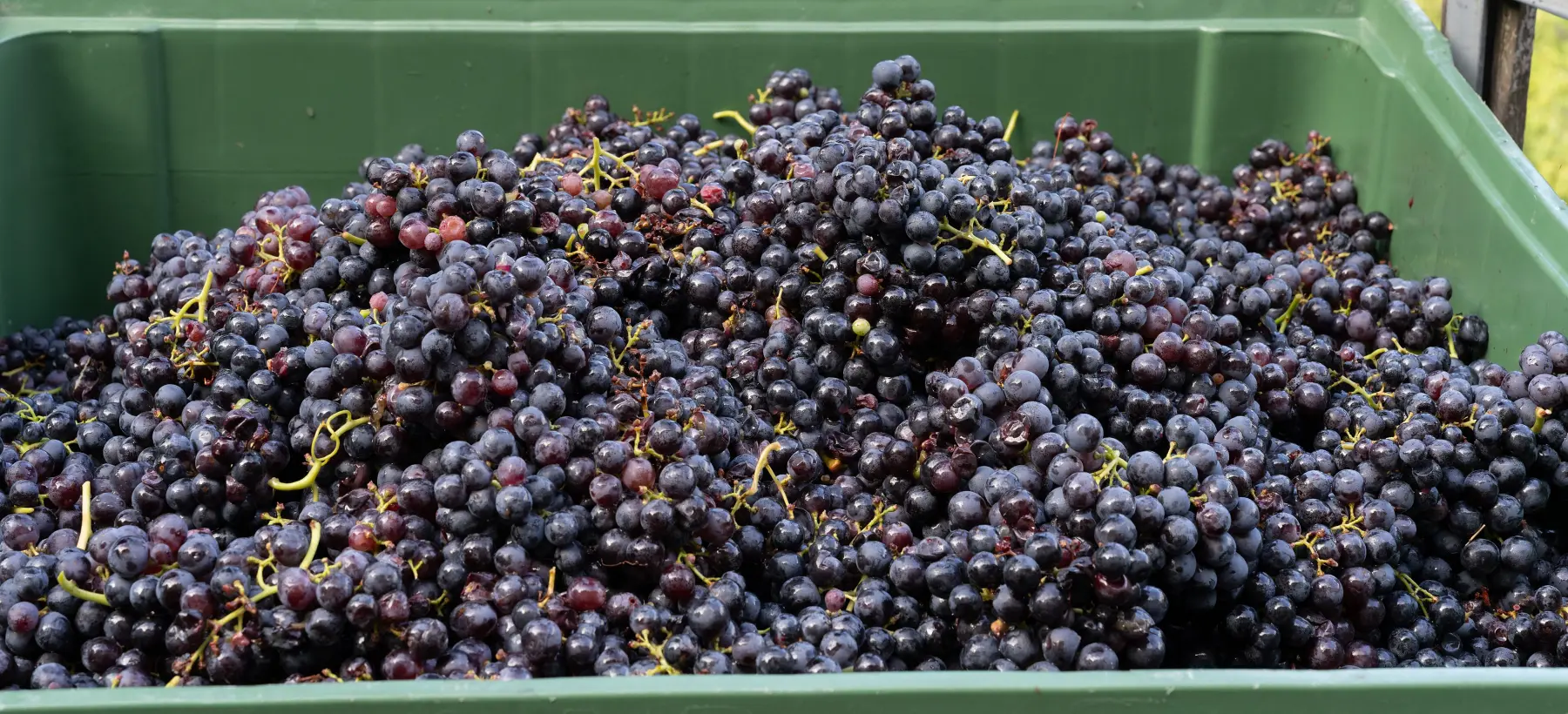
Dark grapes heaped in a plastic collection bin at harvest. Grapes
Solid bins that hold juice, often lower so the fruit at the bottom isn't crushed.
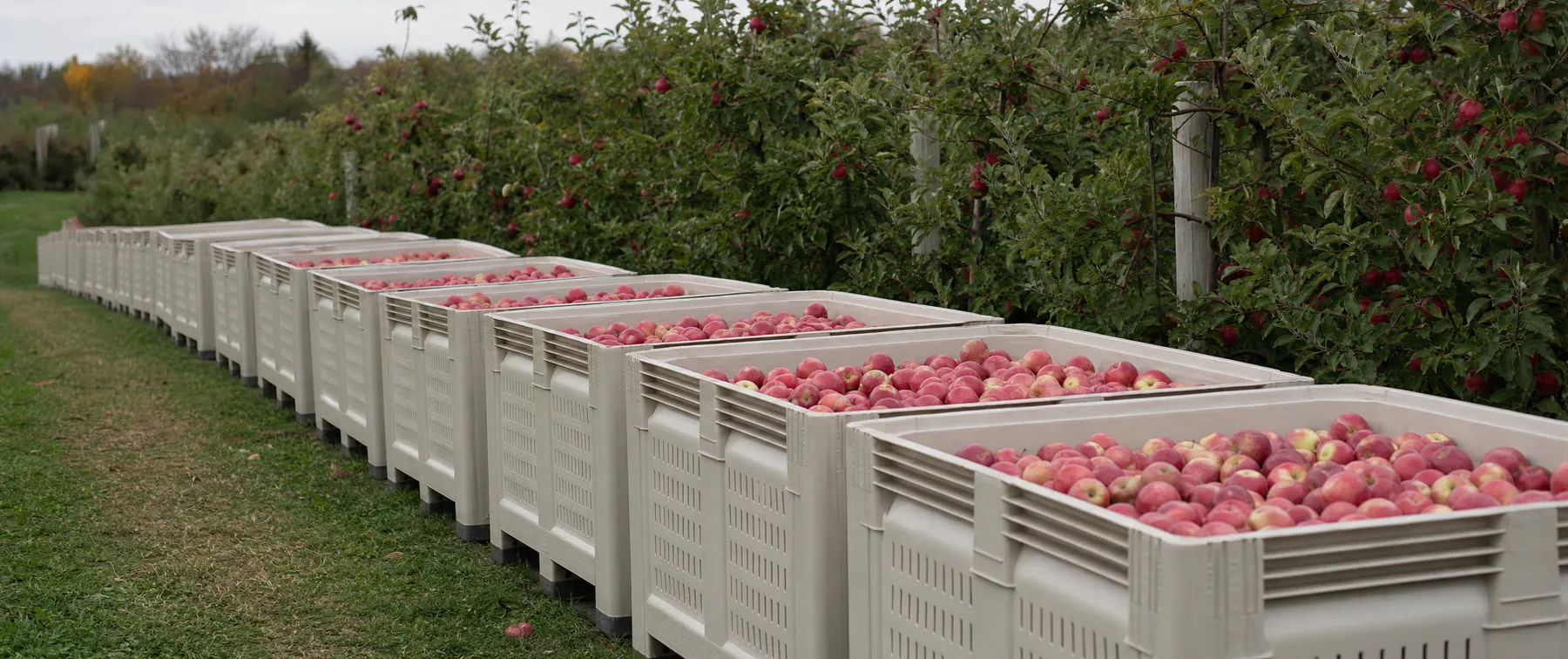
Macro bins of apples along an orchard row. Apples
48 x 48 and 48 x 40 in bins, solid or vented, for orchard to cold storage.
Vented macro bin, and two nested empty. Drawing, not to scale. Nuts, onions and potatoes
Vented bins, where airflow in storage decides how long the crop keeps.
Plastic or wood bins
Many orchards still use wood bins. Growers who switch to plastic usually do it for food safety, because plastic can be washed and doesn't splinter, and for life, because a plastic bin doesn't rot in a wet yard.
Growers renting bins for the season sometimes buy their own once the rent has added up.