Macro bin sizes and dimensions
Macro bins come in two main footprints, 48 x 40 in and 48 x 48 in. The MACX-style bin is 48 x 40 x 31 in outside, holds 1,500 lb or 190 US gallons, and weighs 92 lb empty. Full-vent 48 x 48 in bins can be much taller, such as one at 48 x 48 x 53 in outside.
The 48 x 40 in MACX-style bin
| Line | Figure |
|---|---|
| Outside | 48 x 40 x 31 in (1,219 x 1,016 x 787 mm) |
| Inside | 45 x 36.75 x 25.75 in |
| Capacity | 1,500 lb (680 kg); 190 US gal (719 L) |
| Empty weight | 92 lb (42 kg) |
| Stack load | 14,000 lb (6,350 kg) |
| Per truckload | 150, nested |
From the SJF MACX bin listing, reviewed 2026-11-14. Metric figures converted by us.
The 48 x 48 in bins
Some packers and crops use a square 48 x 48 in footprint. IPL Schoeller's MacroBin 48 Full Vent is 48 x 48 x 53 in outside (IPL Schoeller MacroBin 48 Full Vent page): a much taller bin with open walls, made for crops that are stored in forced air. Square bins don't fit racking built for 48 x 40 in pallets, so check what the packer's cold rooms and dumpers take before you choose.
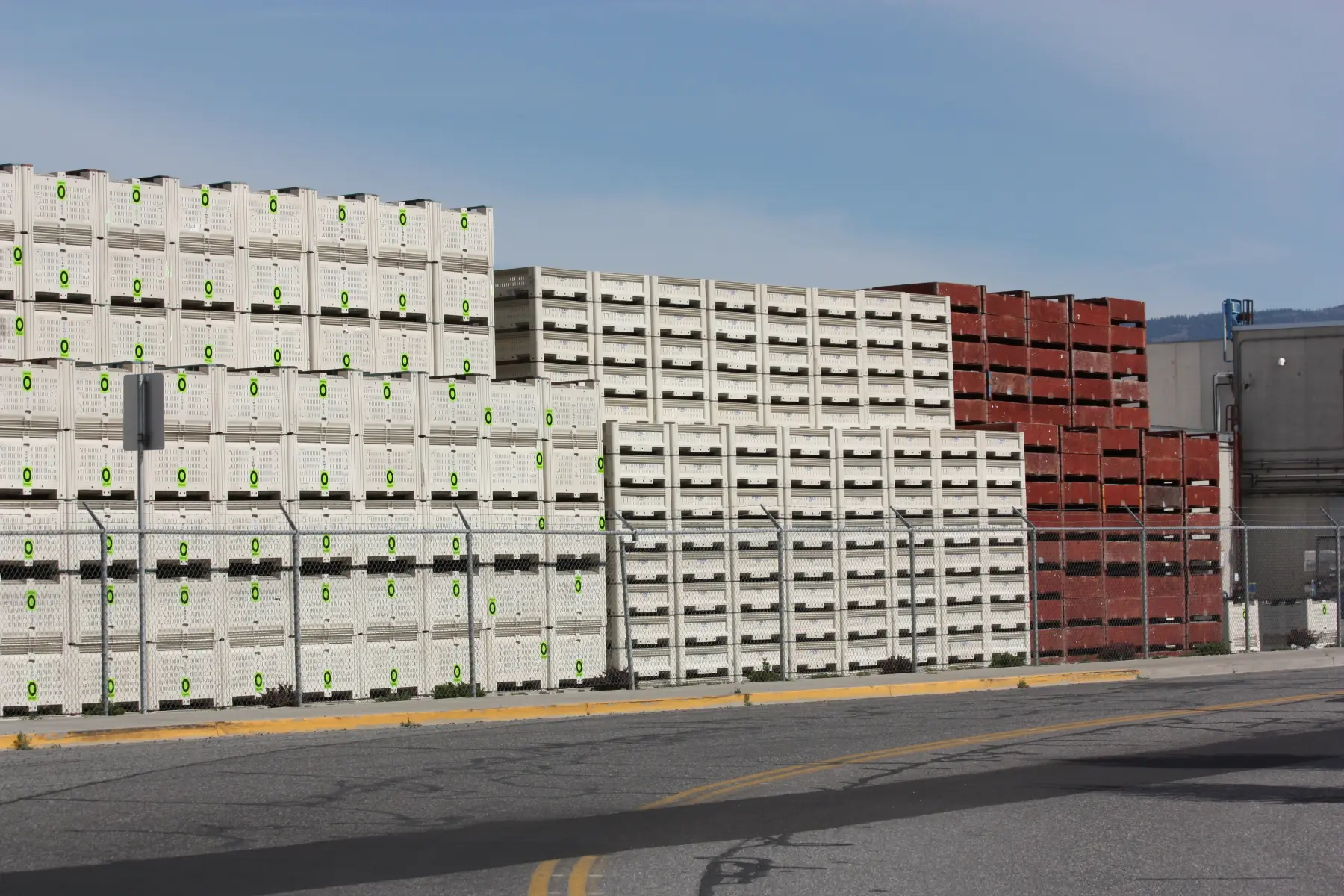
Inside size is what you fill
The inside of the MACX bin is 25.75 in deep against 31 in outside. The difference is the base, which takes forks, and the taper that lets bins nest. Use the inside figures to work out how much crop a bin holds; use the outside figures for racking, trucks and cold rooms.
Solid or vented
Both footprints come solid or vented. Solid walls suit fruit that bruises and grapes that weep juice; vented walls suit onions, potatoes and nuts, which need air through the stack.
Volume, weight and the crop
A MACX bin holds 190 US gallons, about 25 cu ft. How much crop that is depends on the crop's density. Light, loose produce fills the bin before it reaches the 1,500 lb rating; dense crops such as potatoes can reach the rating before the bin is full. Weigh a full bin of your crop once and use that figure, not a guess from the volume.
Heights and stacking
The MACX bin is 31 in tall outside with 25.75 in inside depth. Taller bins hold more but put more weight on the fruit at the bottom and stack fewer high under a cold-room ceiling. Measure the clear height of the store and divide by the bin height before you choose: if a taller bin loses you a whole tier, the store holds less.
Footprint and the packer
Bins go round between the grower and the packer, so the footprint has to suit the packer's bin dumper, bin fillers, cold-room racking and forklift attachments. Many orchard packers run 48 x 48 in; many vegetable and processing plants run 48 x 40 in. Ask before ordering; changing later means two sets of bins.
Bin count per truck
Empty macro bins nest, so about 150 MACX bins go on a truck. Full bins don't nest and are heavy, so a full truck carries far fewer, and the limit is usually the weight of the crop.
Inside measurements and lugs
Pickers often fill buckets or lugs and tip them into a bin. A bin that is 45 x 36.75 in inside gives a wide target, and walls 25.75 in deep inside mean pickers can tip in without lifting high. A deeper bin makes tipping harder late in the day, and fruit falls further onto the fruit below.
Drain holes and washing
Bins used for crops washed in the field, or hosed between loads, need drain holes in the floor so water doesn't pool. Ask for them if you want them; solid bins without holes hold juice, which grape growers want and potato growers don't.
Marking and colour
Growers who share packers mark bins so they come home: a colour, a hot-stamped name or number, or a plate. Plan the marking before ordering, because moulded colour can't be changed later and stamps are easiest on new bins.
Wooden bins
Many orchards still use wooden bins built from plywood and lumber, often made locally. They are cheaper to buy but heavier, absorb water and juice, splinter, and can harbour fungal spores between seasons. Plastic replaced wood for many packers because it washes clean, weighs less and lasts longer, though wood remains common where growers already own large fleets.
Bin trailers and forks
In the orchard, bins ride on low trailers or are placed by tractors with forks on the three-point hitch. Bins with four-way entry are easier for those tractors to pick from any side.
Lids for macro bins
Lids keep birds, leaves and rain out of fruit waiting in the orchard, and some packers cover bins of fruit in cold storage to slow moisture loss.
Cherries and stone fruit
Soft fruit bruises under its own weight, so cherries, peaches and plums often go in shallower bins or lugs, and pickers fill them more gently.
Terms used here
- Macro bin
- A harvest bin for orchards and packing sheds, solid or vented, usually 48 x 40 or 48 x 48.
- Footprint
- Length by width of the base, e.g. 48 x 45 in; it must match the racking, line positions and trailer pattern.
- Tare weight
- The empty container's weight; it counts against freight and forklift limits.
- Static / dynamic load
- Static: what the container bears stacked in storage. Dynamic: what it bears moving or stacked in transit, which is lower.
Tell us the footprint your packer takes and the crop, and we quote the bin by the truckload. Ask for a quote