Plastic bulk containers in Oregon
Oregon's container trade comes off the farm. Fruit and vegetable preserving had 9,076 jobs in 2025, 4.1 times the national share, and USDA counted 139 million cubic feet of refrigerated warehouse space here in October 2025. The Willamette Valley grows berries, hazelnuts, vegetables and grapes; the Hood River valley and the Medford area grow pears and apples.
That makes Oregon a harvest-bin state. Pears and apples go into solid-wall macro bins; hazelnuts go into vented bins so air can move through them in storage; wine grapes go into solid bins that hold juice. Beverage manufacturing had 7,137 jobs, much of it wine and beer.
Multnomah County around Portland had 7,435 warehousing jobs and Marion County, around Salem, 4,206. Both sit on I-5, which carries Oregon produce north to Washington and south to California. Food manufacturing as a whole had 28,203 jobs.
Oregon's Hood River valley grows pears and apples, the Willamette Valley grows hazelnuts, berries and wine grapes, and the Klamath Basin and Treasure Valley grow potatoes and onions. Each of those crops moves in bins: macro bins for pears and apples, vented bins for onions and potatoes, and shallower bins for berries and hazelnuts. Portland's port and its warehouse districts in the east metro and around Troutdale handle goods for the Northwest. West of the Cascades, rain is constant through winter, so bins stored outside should drain and be kept off bare dirt.
Oregon demand is seasonal. Pear packers in Hood River and Medford want solid macro bins topped up before August; hazelnut handlers in the Willamette Valley want vented bins that let nuts dry; potato and onion storages in the Klamath and Treasure valleys want ventilated bins that stack seven or eight high. Portland's distributors need collapsibles that fold small enough to return by the trailerload up I-5 from California.
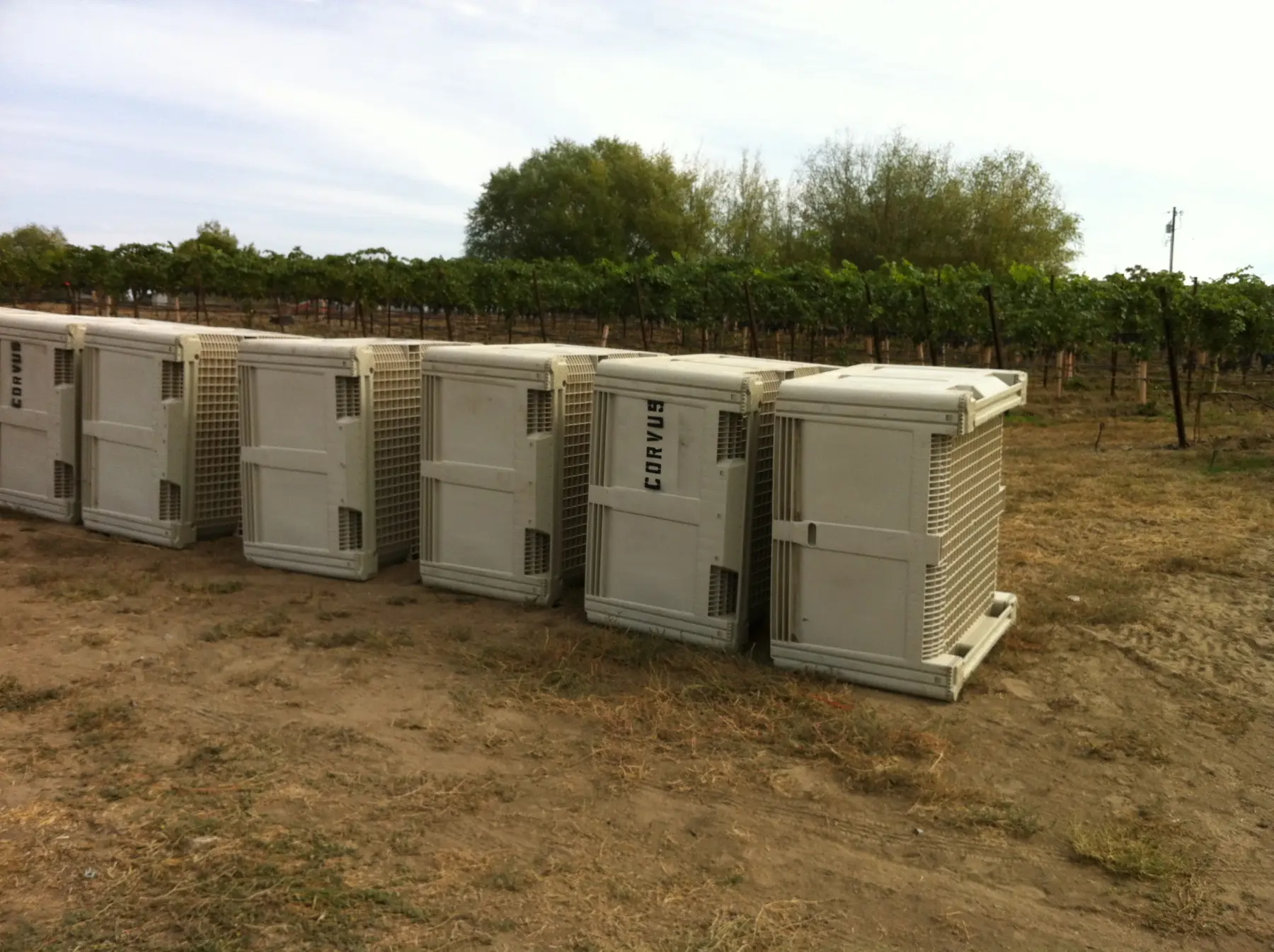

What buyers in Oregon use
- Fruit and vegetable preserving: Macro bins, solid or vented
- Growers fill them in the field and the cannery tips them straight into a flume.
- Beverage manufacturing: Solid-wall bins for ingredients and closures
- Caps, labels and dry ingredients ride in washable bins between lines.
- Food manufacturing: Washable solid-wall bins
- Bins replace corrugated where sanitation crews hose everything down.
Figures on this page: BLS QCEW 2025, private employment; USDA NASS, Capacity of Refrigerated Warehouses.
Send the footprint, heaviest load, how many and the ZIP, and we quote containers delivered anywhere in Oregon. Ask for a quote