Plastic bulk containers in Washington
Washington grows most of the country's apples, and its biggest container trade is the harvest bin. Fruit and vegetable preserving had 10,988 jobs in 2025, 2.8 times the national share, and USDA counted 301 million cubic feet of refrigerated warehouse space here in October 2025, much of it apple storage in the Yakima and Wenatchee valleys.
Apple bins go from the orchard to the packing house and into cold or controlled-atmosphere rooms for months, stacked high. That is macro-bin work: solid walls against bruising, a high stack load, and nesting so 150 empties ride out to the orchard on one truck. Ask your packer which footprint their dumpers take.
West of the mountains, Pierce and King counties around Tacoma and Seattle had 10,323 and 9,341 warehousing jobs, on I-5 and near the ports. Grocery wholesale adds 23,876 jobs and food manufacturing 39,687. Spokane County had 5,387 warehousing jobs.
Central Washington grows most of the US apple crop, and the Yakima and Wenatchee valleys fill macro bins each autumn by the hundreds of thousands. Pears and cherries come off the same orchards. Potatoes from the Columbia Basin around Moses Lake and Pasco go into storage. On the west side, the ports of Seattle and Tacoma move containers to and from Asia, and the warehouse districts in the Kent Valley serve them. Rain west of the Cascades and heat east of them mean different storage advice for bins on each side.
Washington demand is dominated by fruit: macro bins for apples, pears and cherries ordered by the thousand before harvest. Potato storages in the Columbia Basin want vented bins. Port warehouses around Kent and Tacoma use folding containers for staging imports.
Wineries in the Columbia Valley need bins for crush.
Frozen potato plants in the Columbia Basin, making fries for export, need clean food-grade bins that tolerate cold storage.
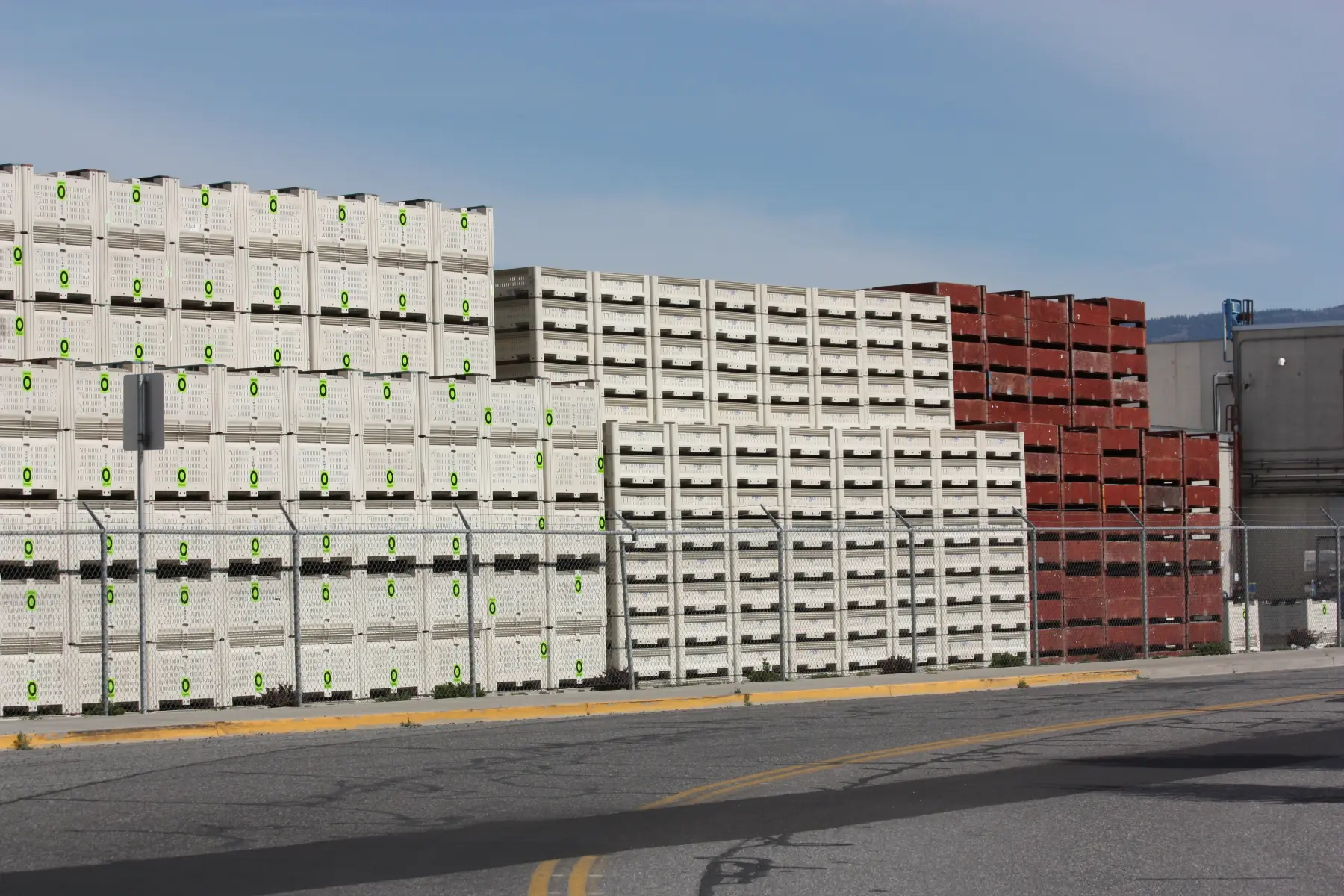

What buyers in Washington use
- Fruit and vegetable preserving: Macro bins, solid or vented
- Growers fill them in the field and the cannery tips them straight into a flume.
- Grocery and related product wholesale: Lidded bins and produce bins
- Produce and dry goods move between docks in bins that stack and cover.
- Food manufacturing: Washable solid-wall bins
- Bins replace corrugated where sanitation crews hose everything down.
Figures on this page: BLS QCEW 2025, private employment; USDA NASS, Capacity of Refrigerated Warehouses.
Counties with the most warehouses
Pierce County, King County, Spokane County.
Metros we cover here
Corridors
Send the footprint, heaviest load, how many and the ZIP, and we quote containers delivered anywhere in Washington. Ask for a quote